Posts

Showing posts with the label bad writing

Write a better book, then
Image
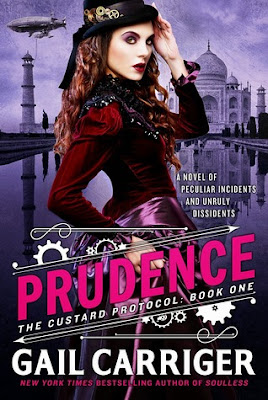
Started a book the other day from the Princeton library's recommended reads and it was atrocious. So bad that I started to worry that I was suffering from some kind of sudden dementia because I couldn't follow the sentences. The cover explanation should have been enough for me not to pick it up. The story is set in Victorian England (I think? They have carriages and parasols, so that's my guess) and the characters include both vampires and werewolves. The two main characters have names I kept confusing--Rue and Widget or something. "Rue" was short for Prudence, but it took me like two chapters to figure that out.  Rue or Prue or Rudence (she was called many names) is a meta-natural, which means that if she touches the skin of a vampire or werewolf, she becomes that creature for a few hours, and zaps the individual's powers for a while. I can imagine the brainstorming that led to this idea. Let's see...I need to come up with a completely different thing...

Liked the Cover, Story was Lame

Image
The old saying that "you can't judge a book by its cover," is simply not true, at least as it applies to actual book choosing. It's untrue not just for the reason you might think. I believe you can judge a bad book by its cover, or at least, you can judge whether or not you will be interested in the book. For example, I never pick up a book that has planets and spaceships on it. I also only infrequently pick up books with women in hoop skirts pressed against shirtless pirates. But you can also think a book will be good because you like the cover, and then find that you've been led astray. Most recently, this happened to me with a book that had an arresting image on the front and a promise of a mystery in the description on the back. The story itself was a disappointment. So, the premise is about this artist woman from the city who moves to a small town so that she can focus on her writing. She secures this amazing farmhouse with a giant barn. However, shortly a...

50 Shades of Graham Cracker

Image
I haven't yet decided if I will go see 50 Shades this weekend. The New Yorker and The New York Times both panned it--but not in a terrible, terrible way--they panned it as they would any guilty pleasure, and then the Huffington Post says it's not very good because there's no actual pleasure for the heroine--like we never see her soaring to heights of ecstasy. But maybe it's so bad that it's good? In any case, here's an info graph from    grammarly.com/grammar-check   for your viewing pleasure.   

Because of You, a Novel illustrating how annoying it is to use the second person

Image
It's not written in second person, not really--what I mean to say is that the first person narrator spends most of the novel in direct address to a man who is stalking her. With sentences like, "You were waiting for me at the bus stop. Seeing you made my stomach turn over, like a fish was dying in it. You smiled, your perfect teeth reminding me of a wolf from a fairy tale story that ended badly." I made those passages up, but you get the gist. I only read about fifty pages before giving up.  Look, I know it's fiction and we should maintain our willing suspension of disbelief, but I was annoyed that the woman didn't consider going to the police to report her stalker until well into the harassment. And when she did, the police were like, Has he hurt you? Threatened you? No. Then there's nothing we can do. That may be true, I don't know. But it's still annoying to read a book where the suspense created isn't because of an interesting story with comp...

Writing Poetry is a (Ginger) Snap (Trap)

Image
This is an essay I wrote for the last issue of Philadelphia Stories about poetry.     Here's how you start a poem. First, find a subject matter that’s dear to your heart (and try to work the phrase “dear to your heart“ into the poem if you can). Possible topics include: death of your grandma, death of your cat, death of your friend’s hamster, death of your virginity. Once you have a topic, begin constructing your lines with the intent to confuse the reader. Never use an obvious word when you can choose a mysterious one. For example, instead of writing the word “yellow” substitute “corn,” so that a line that could read “her hair glowed yellow” will instead be more intriguing as “her hair glowed corn.” The whole point of poetry is to prove that you are smarter than your reader; you want the person reading your poem to wish she could call you up and ask, “What did you mean when you wrote ‘with moon so deep the harvest purple’?” ...

What Not to Do with Character Descriptions

Image
I got my library card almost immediately when we moved to Plainsboro, and anyone who doesn't get one is a fool. All those free books, all of that potential, just waiting for you. I also recently used a book gift card to buy Donna Tartt's newest book, Goldfinch . I started it last week, after finishing one called Fallen Woman (synopsis: a young socialite turned prostitute is murdered in a brothel and her sister comes from NY to Colorado try to figure out who killed her. It's set in the 1800 somethings--I'm not good with the historical details, and it was entertaining, even though I guess who the killer was about half way in, so that was disappointing.The aunt did, okay? Too many clues early on).  I've been trying to get through Goldfinch , but is it shallow to say that the book is just too heavy to read? I read mostly in bed, before falling asleep, and it's difficult to balance a 771 page hardcover book in your hands and still maintain any kind of focus. I gue...

He Mooed

Image
We went over a story in class this week (the one I take; not the one I teach), where almost every dialogue tag was an active verb. I love active verbs, but not in dialogue.  For example, the first two lines of the story we read last night were something like: "Get out of my way!" DuBois growled. "You can't tell me what to do!" The Captain barked. Before you know it, we're going to start thinking the two central characters are a terrier and a bulldog or that we're in the middle of a barn yard. Character will be clucking, neighing, mewoing, or, my personal favorite (Dan came up with this one) mooing. Keep it simple; "he said/she said" unless you're purposefully trying to create a madcap, satirical piece. And watch out for the adverbs. They are not your friends, she warned suspiciously. I did read a funny piece from  The New Yorker this morning that made me LOL on the trolley this morning It's Calvin Trilling's piece in...

The Day I Suddenly Remembered Something Traumatic...

Image
In the writing class I’m taking, we’ve work-shopped a couple of stories that revolve around a character suddenly remember something of significance that happened to her in the past. Here's generally how it unfolds: the story is told from the present day/now, with the character doing something languid--like sitting in bed wrapped up in quilt, remembering. As the story continues, we move back and forth between the present day action and the traumatic event being recalled. In the present tense of the story, the writer describes the character doing mundane things, like spreading butter on a piece of toast or pouring over her reflection in an antique mirror. These activities trigger additional memories that reveal for the reader more of the traumatic event.   By the finish, the event is explained---the baby burned in a fire left by the mother's drunkenly dropped cigarette; the car skidded off the road and into an oncoming semi, the aliens sucked up all of the townspeople, except ...

Downton Abbey Awaits

Image
I don't have much time here, people, because DA--the show for people who like antique pocket watches and leather valises, and fat white labs running across green lawns, and lovely dresses with delicate collars and beadwork, and candlesticks, and dastardely footmen vying against holier than thou butlers--shall be on in 16 minutes. However, I don't like an entire week to go by without at least geting something written in the blog, lest you stop checking it. Have been reading lots of drafts of short stories in both the class I teach and the class I take, and the levels of skill are astonishing--ranging from people who seem to have a good command of the story, to those who have had very little practice writing short stories. Just this afternoon, I read a piece for the class I'm taking that was heavy with images that were unintentionally funny; comparisons being made between chest hair and ants, just as an example (something like: "his hair was stiff and short like ants...

Short Stories are Not Instruction Manuals

Been reading a lot of student fiction lately and submissions to Philadelphia Stories for the next magazine publication, and there are a couple of hiccups I see sometimes in the work. One is the impulse to be very specific about which side a person might be using to complete an activity. For example, sentences like this (not from any real manuscripts): "She picked up the fountain pen with her left hand and began writing on the paper while resting her right cheek on her right palm." While I get the impulse here--writer wants to be sure we're very clear on the way the person is poised--it is unintentionally humorous (perhaps she's sitting on her right palm while writing, if you catch my drift) and unnecessary unless the story is actually a Sherlock Holmes-esque mystery involving forged documents by a person who's really right handed. Better just write: "She picked up the fountain pen and began writing." The additional description of her face resting on h...

Workshops

Image
We went over essays/stories the other night in the class I'm taking at Penn. Last week, we all had to turn in drafts of our work, even if we're not being reviewed for several weeks. This is odd to me. Usually, you turn your piece in the week before it will be workshopped. That way, you can continue working on it up until the last minute. So, for the next four weeks, I am not supposed to make any changes to my story. Of course, I could anyway, but then that means that the class critique might not be relevant by the time we get around to doing it. An older woman in the class unintentionally said the funniest thing. We were going over her piece and talking about comments and she said, Oh, did I need to write comments for my own piece? Sure, yes. "The writing here is hard to follow and I didn't know what was going on." We also did something I've never done in a grad class before--we had a training session on how to give good feedback. The teacher read aloud a pa...

Lost Underwear, Doom, and Writing Contests

Image
Jenn Bing and I discussed the possibility of starting a new blog about Philadelphia called "Found Underwear." Really, a day doesn't go by where I don't see a pair of trashed up women's underwear somewhere along the city sidewalks or gutters. We rethought the blog; Philly gets a bad rap (warranted, for the most part), and I don't want to contribute to making that even worse, especially since I have been begging my friends Liz and Luke to give up Park Slope and move to the city of Brotherly Love/Panties. I also have to confess that I'm reading Stephen King's Under the Dome, which I checked out from the Penn library. I feel guilty reading him...But like, kind of guilty and defensive at the same time. He can tell a good story. After reading the first hundred pages before turning out the lights, I had an apocalyptic dream inspired by what I had just read (it didn't directly correlate, but the same fear was there. This fear that the world was ending o...

As if, Like, Fer Sure...

Image
We will talk on Monday in the writing class about how not to use metaphors and similes. They are so hard to write well, because many are common cliches and others just don't work. Examples of bad similes: She smiled at him like a snake charming a snake charmer. Her eyes danced like two shooting stars across the sky. He felt as heavy as a 550 pound barbell 400 feet beneath the ocean. The dog's tail wagged like a tsunami. Another thing to be really careful of in fiction at all costs is personification. It's hard to do well. Examples of bad personification: The scissors cut angrily into the paper. The graffiti on the brick wall gloated boldly under the streetklamp. With a quick jump, the dice hurled themselves across the table like two tiny square soldiers running from war (hey, bad personification AND a bad simile).

Fame and Fortune

Image
The class I teach for Philadelphia Stories got profiled in a piece by Carlin Romano in The Philadelphia Inquirer today. You can read the article here . Everybody sounds really intelligent and interesting. I passed out the registration forms for the next class (beginning in May), so maybe I will get to teach it again. We talked last night about Flannery O'Connor's short story, "A Good Man is Hard to Find" and there was some debate about whether or not O'Connor means for us to read the grandmother's last moment as one of redemption or condemnation. I, of course, have my own opinion and had to bite the inside of my cheek to keep from shouting, "I am right!" Next week, we'll talk about Hemingway's "Hills Like White Elephants." I am not a huge fan of Hemingway, but that doesn't mean I can't see why other people are. Maybe I should give them an exercise to write bad Hemingway prose. There are actual contests that exist for that ...

Blog Fatigue

Image
Re-re-re-realized the other day that I've been keeping a blog since 2002 and probably a year or two before that time because I used to have a xanga blog in the very, very beginning. The earlier blog(s) I wrote in even more sporadically than I do now--like maybe a few times a month. Lately, I haven't felt much like keeping up with writing here, even on the weekends when I have the extra time. I still write in my journal most mornings for fifteen minutes or so, and I used to make lists of blog post ideas at the conclusion of those entries, but I just don't feel like it so much anymore. Maybe it's cyclical and I'll come back to it soon. It is gratifying and interesting to me to go back and read old posts, you know, from when I lived in State College, especially since I have such a spotty memory and so can be surprised again and again by the same information (in fact, in another couple of months, you'll probably see another post that reads, Gee, I've been keepi...

Being on a Panel

Image
Picked this illustration because it was the third thing that came up when I googled "awkward" in an image search. Because awkward was how I felt for most of today. Okay, so just got back from the "Push to Publish" event with Philadelphia Stories , a day-long writing retreat. I was supposed to pretend that I was the expert. This means that I was one of the editors in the "Speed Dating with the Editors" portion of the day and on two other panels, "Is the Short Story Collection Dead?" and "Writing for Blogs." I was more nervous about the first one because it seemed like we should all just show up and vote "yes" or "no." But it went pretty well, even though I felt like a total phony--giving advice about submitting your work when I haven't sent out a short story in, oh, I don't know, two years? Strangely, the first panel went better than the second one--I was more confident about talking about blogging but there ...

Self-Editing

Image
Part of weird disconcerting thing about having a blog is that you're always wondering if someone who you don't want to read it will find it anyway and get pissed at you. For instance, is it safe to write about my screen-writing class (the one that meets tonight where I have previously been instructed to buy the teacher coffee before each meeting)? Or the writing group I went to last night; I have some thoughts about that too, but what if someone from my class...Okay, fuck it though, because what is the purpose of writing anything down if you're too worried about hurting someone's feeling? Overall, I like the writing in the class. I wouldn't say that anything I've read is publishable at this point, but none of it's unbelievably bad either and several writers could potentially do more with their work. Some might be in the group just to write just to write, not because they are striving to have be published. So, okay. But it's a tense little group and there...

Dis-Orderly

Image
That's a joke Jodie and I used to have about a title for a story I was trying to write, or maybe it was my thesis. "Disorderly" would be a double play on words like the guy's job was as an orderly in a hospital, but he was bad at it and his life was in shambles, but it was also a reference to an accidental comment J once made to like the only black guy in the PhD program. She said, "Gee, Verne, your shoes sho is shiny!" I don't think he even noticed, but she felt like dying as soon as the words were out of her mouth. So the title of the story would also be racist as if someone were saying "dis orderly, not dat one." I only thought of that conversation with Jodie because I was recently trying to figure out why I watch so much Law and Order: SVU ( I have to qualify b/c of the many versions. Not a big fan of Criminal Intent or the other one, uh, Law and Order: Judgement Day or whatever it is ) . I must like it, right? Even though it follows the sa...

Don't Write This

Image
Though my own writing impulse is lost in some psychic abyss, I still find it quite easy to identify the things I don't like in writing or the mistakes you can make in a story. Here's a short list: 1. Having a first person narrator who turns out to be dead at the end. Like, the last line is: "And then he shot me dead..." Or, "And that's how I died that day." Because, really, how are you telling the story then? 2. Cramming 15 characters into a ten page story like this: "Tommy opened the door. 'Hi, Timmy,' he said. Tony was in the kitchen, blending the drinks with Rich. 'Come on in,' called Joe from the living room where he was playing cards with Jack, Jim, Todd, and Dan. 'Sam called,' announced the man with the blue suit from the top of the stairs. The dog, Jeff, barked. 'We're in for it now,' said a familiar voice." 3. Anything that's too directly derivative, like the fake writing exercise I did the othe...